
Transport communications

Portcare International is the press relations consultancy for the shipping and logistics industry. Formed by transport people for transport people. We can truly claim to understand our clients’ needs and ‘talk the same language’. Portcare provide effective, value for money PR to some of the industry’s best-known names.

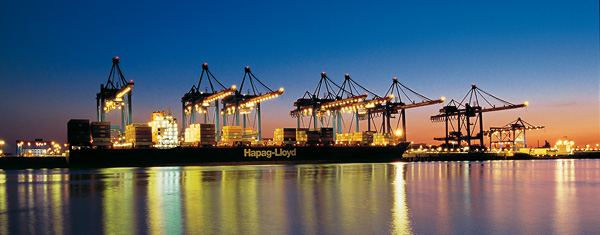
The Importance of Regular Structural Examinations of Quay Cranes

In an appeal aimed at worldwide operators of quay cranes of all types and dimensions, global transport and logistics insurer is calling for increased attention to structural surveying as part of its on-going drive towards loss prevention.

The Club’s analysis of port and terminal incidents reveals a disturbing number of major structural failures in port equipment in recent years. Not only can this type of equipment failure be very costly in terms of repairs and operational downtime but can result in serious accidents and injuries.

Laurence Jones, TT Club’s Global Risk Assessment Director, stresses how essential it is for operators of ports and cargo handling facilities to establish a regular sequence of maintenance and thorough examination of all the lifting appliances it utilises. “Provisions for such examinations are specified in ILO Convention 152 and its accompanying Code of Practice, and represent the international standard for the port industry. The purpose of a thorough examination is to make sure a crane can continue working safely and effectively, and a crucial element of this with regard to a quay crane is the safety of its structure,” Jones emphasised.

The Club recommends that independent examinations are always performed when procuring any type of crane. The ILO Convention requires that before being brought into commission for the first time, lifting appliances are tested and a thorough examination carried out. The Club also recommends that appropriate mechanical and electrical inspections are carried out during installation and commissioning to check for quality and conformance to standards and specification – beyond the ILO Convention requirement. Once commissioned, a crane should also be examined regularly during its operational life, regardless of how good its manufacture. Damage resulting from relatively minor impacts, regular heavy-lifts close or equal to the safe working load limits, intensive use or simply general wear and tear can affect the integrity of the crane’s structure. Often such operational issues can occur without anybody being aware, so regular examinations need to be conducted. Any known incident should clearly result in a check on the structural integrity of the crane at that time. This advice applies equally to fixed and mobile cranes of any type.

The ILO standard calls for a competent person to carry out the testing and thorough examinations. ‘Competent person’ is defined as ‘a person possessing the knowledge and experience required for the performance of a specific duty or duties and acceptable as such to the competent authority’ and it is common practice to utilise third party inspection companies to check for quality and design conformance during manufacture. Laurence Jones recommends that only specialist inspection companies should be used, such as Bureau Veritas, Lloyd’s Register, Liftech Consultants and World Crane Services. These companies provide examinations globally during and after manufacture, although it is clear that there are other equally competent and locally based service providers. Thorough examinations during the life of the crane should fall within a strict maintenance policy that is seeking to maximise its useful life and minimise unplanned downtime.

The standard also defines a thorough examination as ‘a detailed visual examination by a competent person, supplemented if necessary by other suitable means or measures, in order to arrive at a reliable conclusion as to the safety of the appliance examined’ and an integral element of the examination should involve the crane structure itself. The Club’s analysis indicates that the actual structure, because of its size and complexity, may not always be examined as often as it should. The standard calls for such examinations to be conducted at least once every twelve months. Generally, as a crane gets older the examination frequency should increase. But, warns Jones, some countries have less stringent or no regulatory requirements at all in their laws. “All regulatory requirements must be adhered to, but for those with no regulatory requirements a minimum examination period should be implemented based on the international standards,” he stated. Furthermore, the regularity of examinations should increase based on the degree of use and if this is at or close to the crane’s safe working load limits. Obviously, regular mechanical, electrical and painting maintenance should also be implemented to ensure safe and reliable operation.

“We need to ensure compliance with the standard to ensure safe and reliable operations”, said Jones. “Regular crane examinations will in the long term save downtime and money. It makes economic sense. But more importantly it will save lives.”

ENDS

Note to Editors:

The TT Club is the international transport and logistics industry’s leading provider of insurance and related risk management services. Established in 1968, the Club’s membership comprises ship operators, ports and terminals, road, rail and airfreight operators, logistics companies and container lessors. As a mutual insurer, the Club exists to provide its policyholders with benefits, which include specialist underwriting expertise, a world-wide office network providing claims management services, and first class risk management and loss prevention advice.

Delivery of Large Size Platform Supply Vessel (PSV) “KL BREVIKFJORD”

Kawasaki Kisen Kaisha, Ltd. (K Line) is pleased to announce that K LINE OFFSHORE AS (KOAS) took successful delivery of its first large size PSV(1) “KL BREVIKFJORD”, constructed at STX Europe Brevik Yard in Norway on September 24th. KOAS, headquartered in Arendal, Norway is the owner and operator of the vessel, and K Line holds 95% of KOAS shares.

Click image for full-size version

This vessel, which is also the first Offshore Support Vessel (OSV) built by K Line Group, will be chartered for a period of a maximum of eight years to the Brazilian National Oil Company Petroleo Brasileiro S.A. (Petrobras), after delivery.

This vessel’s unique features include largest deadweight tons of 5,100 MT with 1,100 m2 cargo deck area and equipped with Dynamic Positioning System (DPS(2)). Also, the vessel features environmentally-friendly specifications, so-called Clean Design, including double-hull structure for fuel oil tanks and equipped with Ballast Water Management System prior to the IMO-BWM (Ballast Water Management Convention) coming into effect.

KOAS is scheduled to deliver two Anchor Handling Tug Supply Vessels (AHTS(3)) and three PSVs by July 2011. The company will offer efficient, safe and environmentally-friendly OSV services to its customers in growing offshore oil and gas field development worldwide.

(1) PSV is used for transport of cargo (Fuel, Food, Water, Dry-Bulk, Explosives, etc.) to and from offshore installations.

(2) DPS is designed to maintain a specified position by vessel’s propulsion system such as thrusters.

(3) AHTS is a multiple-purpose tug designed for transport of cargo in addition to anchor handling, towing duties of floating rigs (Jack Ups, Semi Submersibles, etc.) and installation of sub-sea equipment.

Vessel’s Specifications:

  • LOA 94.9 M
  • Beam 20.0 M
  • Depth 8.0 M
  • Speed 15.3 Knots
  • Deadweight Tons 5,100 MT
  • Cargo deck area 1,100 m2
  • Accommodation 25 persons

Chauncy Maples makes a million

On 29 September at London’s Dorchester Hotel, Thomas Miller, a London-based specialist insurance company, announced that the funds raised for the renovation of the medical ship Chauncy Maples had passed the £1million mark, halfway to the project’s £2million target.

The charity had just raised £6,000 from an auction of five sale items including a cruise donated by Royal Caribbean Cruise Lines. The auction was conducted by Andrew Binstock, one of the UK’s leading auctioneers.

Thomas Miller is the sponsor of the Chauncy Maples Malawi Trust, a UK charity which is renovating the 19th century ship as a clinic to provide essential medical services to the lakeside people of Malawi. The Malawi Ministry of Health, the owner of Chauncy Maples, has committed more than £250,000 to the project, actively planning the renovation work in conjunction with the contractor.

Hugo Wynn-Williams, chairman of Thomas Miller, commented:

“Reaching the halfway stage in only three months since the project launched in June is a truly magnificent effort by our community. I have been genuinely surprised by the very positive response not just to fundraising but also the desire to participate in all sorts of ways.”

“Since the outset we have wanted to celebrate our anniversary with something better than a party – this has exceeded our wildest dreams”.

Mark Holford of Thomas Miller explained how the funds raised thus far were already being put to good use:

“In the past two weeks, work has commenced in Malawi in stripping out the ship in preparation for major hull work in a dry dock in October. Our next step is to persuade the world’s maritime manufacturers to donate the £800,000 worth of parts necessary for the renovation work.”

Eighty-five per cent of the £1 million raised so far has come from Thomas Miller, which donated £250,000, and its business community.

Sixteen donors have given at least £25,000 each to become Founders of the project, including five of Thomas Miller’s transport clubs: UK P&I Club, UK Defence Club, TT Club, Hellenic War Risks and ITIC.

Three UK law firms have also become Founders: Ince, Holman Fenwick Willan and Reed Smith, which considers Thomas Miller to be its oldest client. American law firms have also been significant donors, led by New York law firm Blank Rome.

Another Founder, the broker Miller Insurance Services, is taking a ‘charity’ slip around Lloyd’s and other London underwriters which has produced £65,000 so far.

Note to editors

Established in 1885 as the manager of the UK P&I Club (www.ukpandi.com), Thomas Miller is celebrating its 125th anniversary this year. A global leader in the management of transport mutual insurance clubs, it provides insurance services to

approximately 50% of the world’s shipowners as well as many of the world’s leading ports, terminals, logistic operators, ship brokers, ship agents and other types of transport intermediaries.

In recent years, it has also extended into non-marine activities and today provides professional indemnity insurance services to barristers, solicitors, patent agents, housing associations and pension fund trustees.

In addition, its investment division has US$4 billion under management split approximately 50/50 between in-house and external clients.

For further information on Thomas Miller and its various activities, including links to associated websites, please see www.thomasmiller.com. A new Thomas Miller website will be launched on Thursday 17 June 2010.

For further information on the Chauncy Maples Malawi Trust, please see www.chauncymaples.org.

Photographs and images to accompany this press release are available to download http://www.dunelmpr.co.uk/ThomasMiller-Photogallery-NEW.html

“K” Line Expands Installation of Latest Heading Control System into Operating Vessels

Kawasaki Kisen Kaisha, Ltd (“K” Line) and Yokogawa Denshikiki Co., Ltd. (YDK) are pleased to announce expansion of the installation of the latest heading control system to “K” Line’s operating vessels due to its effectiveness.

YDK released the new heading control system called BNAAC, Batch Noise Adaptive Autopilot Controller, intended to increase fuel economy. The principal of this system is to update the ship’s parameter all the time by monitoring and reflecting changing meteorological and hydrographic conditions, while the original system just reflected the initial parameter setting.

“K” Line and YDK made the experimental trial of this system using an operating bulk carrier vessel thence successfully reached approximately 1 percent reduction of carbon dioxide emissions compared with the current system.

While “K” Line has already started to install BNAAC system to newly-built vessels, based on the results of the trial its expansion into operating vessels was decided, and the first vessel to be installed was M/V Becchio Bridge calling at Tokyo bay on September 13th.

Both “K” Line and YDK are jointly challenging preservation and conservation to protect our global environment.