

Transport communications

Portcare International is the press relations consultancy for the shipping and logistics industry. Formed by transport people for transport people. We can truly claim to understand our clients’ needs and ‘talk the same language’. Portcare provide effective, value for money PR to some of the industry’s best-known names.

TT Club eager to make pest control workshop a collaborative success

Seaborne invasive pests have potentially devastating consequences for agriculture and the natural environment.  TT Club believes all involved in intermodal cargo movements need to be aware of their responsibilities to tighten biosecurity. An IPPC* Workshop, free to all interested parties takes place in London (19-20 September).   Industry representatives must register by 31st July

London, 21st July 2022

TT Club recognises the vital importance of focussing on the threat of invasive pests to natural resources across the world, and of the urgency in crafting effective and proportionate risk reduction measures that address the situation.  The freight transport insurer is issuing a call for action, encouraging those involved in the intermodal supply chain in whatever capacity to help guide international regulators and create pragmatic working practices to minimise the dangers while allowing international trade to continue to flow.

“Industry players of all types have a great opportunity to be part of responsible efforts to mitigate the serious concerns over possible infestation via contaminated seaborne intermodal freight vectors,” comments TT’s Peregrine Storrs-Fox. “ The International workshop on reducing the introduction of pests through the sea container pathway’, being held over two days in London in September, could be a significant part of that opportunity.  We would encourage as many of those involved in the packing, transporting, handling and providing containers for export to attend.  Your registration is required urgently by 31st July.”

The workshop will take place from 19 to 20 September 2022, at Queen Elizabeth II Centre, London, United Kingdom. Participation is free of charge. Register HERE

The efficient movement of sea containers through a complex and time-sensitive global supply chain involves over 240 million container moves each year.  Clearly, any regulatory requirements that might further add to these complexities could have negative consequences beyond any benefits to pest control.  Therefore over the last several years, the IPPC and partners have been working together to examine practical measures to restrict dangerous pest transfers via the container trades.

The Sea Container Task Force (SCTF) was established to collect existing data from countries, and consider the issue.  Its report was concluded at the beginning of this year and this workshop is the next step in discussing the recommendations it made.

“Detail of the Workshop’s objectives and expected outcomes are outlined on the IPPC website as indicated above, however it is hoped, above all that the proposed measures enjoy a full airing and undergo comprehensive debate,” comments Storrs-Fox.  “It is vital that all involved, such as container lines, container manufacturers, freight forwarders, packers, shippers (both exporters and importers), port authorities and terminal operators are consulted.”

Any targeted measures that come into force via international regulations need to be effective in dealing with the issue of pest contamination of both containers and their cargoes, but they should do so in a way that achieves risk reduction with minimal impact on container logistics.

*The international Plant Protection Convention (IPPC) is an international convention, signed by over 180 countries and governed by the Commission on Phytosanitary Measures, part of the UN’s Food and Agriculture Organisation (FAO).  

About TT Club

TT Club is the established market-leading independent provider of mutual insurance and related risk management services to the international transport and logistics industry. TT Club’s primary objective is to help make the industry safer and more secure. Founded in 1968, the Club has more than 1100 Members, spanning container owners and operators, ports and terminals, and logistics companies, working across maritime, road, rail, and air. TT Club is renowned for its high-quality service, in-depth industry knowledge and enduring Member loyalty. It retains more than 97% of its Members with a third of its entire membership having chosen to insure with the Club for 20 years or more.

https://www.ttclub.com

Names of the Young Logistics Professionals Award 2022’s regional winners finally released!

FIATA International Federation of Freight Forwarders Associations and TT Club, international freight transport insurer, reveal this year’s regional winners of the Young Logistics Professionals (YLP) Award 2022.

Geneva and London, 20 July 2022

The 2022 regional winners are:

  • Region Africa and Middle East: Ruvimbo Gukwe, SFAAZ, Zimbabwe : Dissertation: Growth by COVID
  • Region Americas: Karina Daniela Perez Perez, CIFFA, Canada : Dissertation: Resilient Solutions: The Future of Freight Forwarding and Logistics
  • Region Asia-Pacific: Avishkar Srivastava, FFFAI, India : Dissertation: Sustainability through efficiency Decarbonising trade lanes through sustainable logistics
  • Region Europe: Maximilian Druschler, DSLV, Germany :
    Dissertation: Logistics’ crucial role in the battle against the UN Global Issues

FIATA Director General, Dr Stéphane Graber, shared his congratulations to the four regional winners: “The YLP Award is of outmost importance for FIATA. It aims at developing the youth’s interest in the industry but also the soft skills that are crucial in the daily work of our demanding sector. I would like to extend my warmest congratulations to all the YLP Award 2022 candidates and most particularly to the four regional winners for their impressive dissertations. They have managed to put into words complex processes of the global supply chain while taking into account diverse parameters. The future of logistics is in the youth’s hands, and I could not be more proud.”

“All four regions were represented by a variety of impressive entries and the judges were struck by the high incidence of projects requiring close consideration of environmental factors and prioritising sustainability. Multimodal solutions were to the fore and in addition to medical supplies, cargoes featured included insecticides, rail tracks, military ordinance, drilling rods and a satellite. We never tire of reading about the innovative approaches to logistical challenges employed by our young professionals.  TT Club as ever is both proud and encouraged by the high levels of competence portrayed throughout the sector and is committed to maintaining its long-lasting support for the awards.” says Mike Yarwood, Managing Director Loss Prevention, TT Club and Chair of the Panel of Judges.

Both FIATA and TT Club are thrilled to continue recognising the inspirational and dynamic minds of the young logistics professionals’ community. As we slowly move away from the pandemic, FIATA and TT Club are looking forward to returning to the physical competition format. This year and if the conditions allow, the four regional winners will present their dissertations at the FIATA World Congress in Busan, South Korea, during a dedicated session with the final judging and announcement of the YLP Global Winner 2022. This will be a wonderful opportunity for the regional winners to fully immerse themselves in the freight forwarding community and meet their counterparts in Korea’s marine capital city. Stay tuned!

About FIATA

FIATA International Federation of Freight Forwarders Associations is a nongovernmental, membership-based organization representing freight forwarders in some 150 countries. FIATA’s membership is composed of 111 Associations Members and more than 5,500 Individual Members, overall representing an industry of 40,000 freight forwarding and logistics firms worldwide. Based in Geneva, FIATA is ‘the global voice of freight logistics’ www.fiata.org 

About TT Club

TT Club is the established market-leading independent provider of mutual insurance and related risk management services to the international transport and logistics industry. TT Club’s primary objective is to help make the industry safer and more secure. Founded in 1968, the Club has more than 1100 Members, spanning container owners and operators, ports and terminals, and logistics companies, working across maritime, road, rail, and air. TT Club is renowned for its high-quality service, in-depth industry knowledge and enduring Member loyalty. It retains more than 97% of its Members with a third of its entire membership having chosen to insure with the Club for 20 years or more. https://www.ttclub.com

“K” Line : Signing of Additional Purchase Agreement and Technology Development Agreement for Automatic Kite Systems

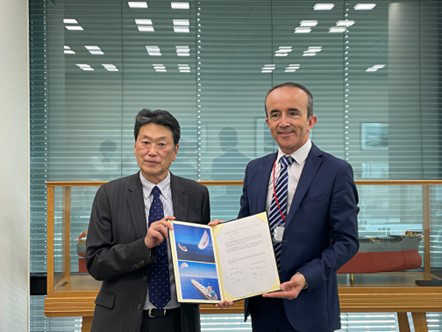
Kawasaki Kisen Kaisha, Ltd. (“K” LINE) has already decided to install “Seawing”, an automatic kite system developed by AIRSEAS SAS Ltd. (AIRSEAS), on two of our Capesize bulkers, and has now signed the contract for the purchase of three additional “Seawing” units with AIRSEAS.

Signing of “Technical Cooperation Agreement”
From right
Mr. Vincent Bernatets, Chief Executive Officer, Airseas SAS Ltd.
Mr. Daisuke Arai, Managing Executive Officer, Kawasaki Kisen Kaisha, Ltd.

The additional “Seawing” units will be installed on three post-Panamax bulkers, which are expected to reduce CO2 emissions by more than 20%, similar to Capesize bulkers case. This will be a one of our efforts to achieve our GHG reduction target. The first ship of implementation is scheduled for a Capesize bulker in Dec. 2022.

In addition, “K” LINE and AIRSEAS have signed a technology development agreement for the effective utilization of the traction power from the “Seawing” based on renewable energy.

Specifically,the objective of the agreement is to maximize the performance of “Seawing” by integrating “K” LINE’s ship operational technology with utilization of “Kawasaki Integrated Maritime Solutions” (*1) and AIRSEAS’s “Seawing” development technology.

“K” LINE is working to realize sustainable society and increase corporate value and reduce its environmental impact to achieve our goal of “Net Zero GHG Emissions by 2050” set forth in the “K” LINE Environmental Vision 2050 (*2) through the innovation of various environmental improvement technologies such as “Seawing”.

Press Release about “Seawing” installation

* June 7, 2019: Installation of “Seawing”, an automated kite system utilizing natural energy

https://www.kline.co.jp/en/news/csr/csr7510328279625406497/main/0/link/190607EN%20.pdf

* July 20, 2021: Signing of a Long-term Consecutive Voyage Charter for our first LNG-fueled Capesize Bulk Carrier

https://www.kline.co.jp/en/news/drybulk/drybulk8599282089888261624/main/0/link/210720EN.pdf

REFERENCE LINKS

*1: Kawasaki Integrated Maritime Solutions, Integrated vessel operation and performance management system.

https://www.kline.co.jp/en/news/other/other3295047094663452046.html

*2: “K” LINE Environmental Vision 2050

https://www.kline.co.jp/en/news/ir/auto_20211102423677/pdfFile.pdf

“K” Line Group starts collaborative research on Decarbonization with Emirates Global Aluminium

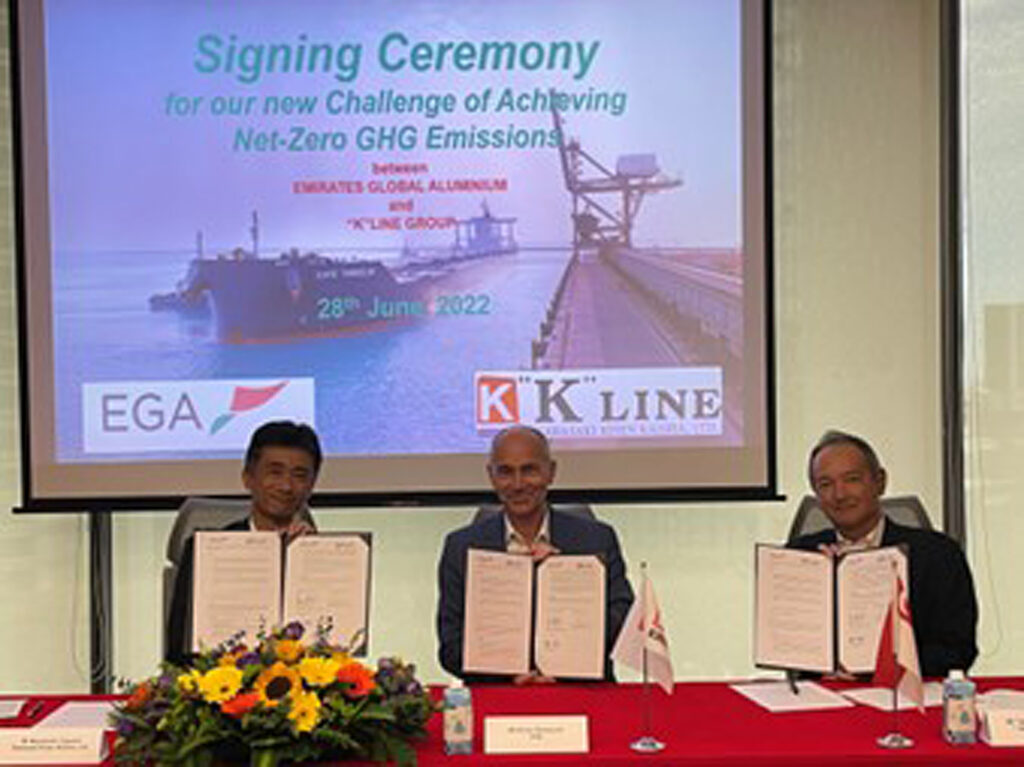
Kawasaki Kisen Kaisha, Ltd. Group (“K” Line Group) is pleased to announce that we signed the memorandum of understanding with Emirates Global Aluminium (EGA) for establishing the working committee for collaborative research on Decarbonization. 

“K” Line group have been engaging in seaborne transportation of the raw material for EGA since 1979, when the predecessor company of EGA,“Dubai Aluminium”, was founded. We also started long term COA from 2019, shipping around 5 million tons of bauxite per annum. “K” Line Group is delighted to share that on this occasion, EGA and “K” Line Group agreed to collaborate together through the sharing of research and ideas and utilising and leveraging on the respective party’s knowledge about new marine technology, alternative fuels and other fields potentially growing in the near future, so as to achieve the common target of a Net-Zero Green House Gas emission by 2050.

In our Medium-Term Management Plan published on May 2022(Note1), “K” Line defined Marine Transportation Business by Large Vessel, such as Bauxite and Iron Ore as one of the top priority areas for driving growth. We will continuously strive to enhance our corporate value by contributing to the sustainable development of the society and global environment through active collaborations on Decarbonization through the development of partnership with customers.

ICHCA joins Container Cleanliness Industry Advisory Group

World food security and biodiversity is at risk from contaminating pests.  Plant pests and diseases are responsible for the loss of up to 40% of global food crops and trade losses exceeding $22bn annually.

The lead UN body, the Commission on Phytosanitary Measures has created a phytosanitary expert Focus Group to look at potential pest contamination on sea containers.  Recognising the need for supply chain input, they asked industry to form a Container Cleanliness Industry Advisory Group (CCIAG) to provide advice, suggestions and recommendations on:

  • cleanliness of the interior and exterior of intermodal freight containers and their cargoes
  • risks of pest contamination in the international containerized supply chain.

We are pleased to report that our application to join the CCIAG has been accepted. Managing contaminating pests is best approached through collective effort that includes plant protection, industry and other stakeholders. Critically, ICHCA’s role is to work with stakeholder partners to ensure safety is “baked in” to the delivery of practical and sustainable outcomes.

Next steps… a major International  workshop on reducing the introduction of pests through the sea container pathway, London, UK on 19-20 September 2022.

Contact us at secretariat@ichca.com for more information about the conference.

About ICHCA International

Established in 1952, ICHCA International is an independent, not-for-profit organisation dedicated to improving the safety, productivity and efficiency of cargo handling and movement worldwide. ICHCA’s privileged NGO status enables it to represent its members, and the cargo handling industry at large, in front of national and international agencies and regulatory bodies, while its Technical Panel provides best practice advice and develops publications on a wide range of practical cargo handling issues.


Operating through a series of national and regional chapters, including ICHCA Australia, ICHCA Japan and plus Correspondence and Working Groups, ICHCA provides a focal point for informing, educating, lobbying and networking to improve knowledge and best practice across the cargo handling chain.

www.ichca.com

TT Club urges IMO Member States to increase container and cargo inspections and submit reports urgently

Past reporting of inspections carried out has been sparse.  In welcoming the IMO’s revised guidelines for inspections, the international freight transport insurer TT Club exhorts governments to report findings to IMO on 2021 inspections, as well as to increase the volume of inspections carried out.  This would helpfully inform the international maritime regulator and support industry players who are striving to ensure safety and reduce dangerous incidents.

Revised Guidelines for the Implementation of the Inspection of Cargo Transport Units (CTUs)* issued last month by the IMO are aimed at helping governments to implement a uniform and safe inspection programme.  The IMO Circular (MSC.1/Circ.1649) seeks to broaden the inspections undertaken and align fully with safety guidance developed during the last decade (previous guidelines date from 2012).

Specifically, governments are now requested to select from all cargo types, rather than simply declared dangerous goods, for inspection. Further the guidance takes account of the issuance of the CTU Code¹, revisions of container safety regulations and the need to minimise the movement of invasive pests. The Circular additionally notes the continuing low rate submission of inspection reports and encourages an increase in such inspections.

Peregrine Storrs-Fox is TT’s Risk Management Director, “With the string of container ship fire casualties and fatal incidents at storage facilities, most recently at Chittagong (Chattogram), in our minds, our current concerns are manifest. They constantly remind us of the importance of adequate safety procedures in packing, handling and transporting the array of cargoes that have the potential to cause catastrophic incidents,” he states.

“With only five of the 179 governments affiliated with IMO submitting reports on inspections at the last Carriage of Cargoes and Containers (CCC) sub-committee meeting in September 2021, the industry urgently seeks more collaborative support from governments in combatting the potential circumstances and cargo packing practices that cause dangerous incidents.  It would be much appreciated if more national reports undertaken during 2021 can still be reported for consideration at the next CCC this September.  However, TT calls for a viable sample of inspections in future based on the new guidelines. In this regard, TT would urge strongly that governments enter dialogue with industry to understand how the latter can work with enforcement agencies to improve safety.”

TT itself has long campaigned for an increased awareness of the issues surrounding the transport of dangerous goods, and all potentially hazardous cargoes.  It is dedicated to improving standards for the safe and secure packing of all cargoes in cargo transport units.

There is a plethora of industry generated guidance on best practice relating to packing and handling of cargoes, including the Quick Guide to the CTU Code, along with a Checklist of actions required of those packing cargo in freight containers, published by the Cargo Integrity Group and available in several languages².

Such work by industry groups can only be strengthened by a partnership with governments.  Their action on inspections, with the help of the new revisions to the IMO guidelines and use of that body’s reporting system is crucial.

Storrs-Fox concludes, “The international supply chains that service the trade in a myriad of commodities are complex and notoriously susceptible to disruption.  Congestion and delays increase the challenges involved in maintaining safety levels in an environment where the demand for reliable delivery of goods is high.  Such circumstances require an even higher level of attention to safe practices.  The collection of information on the effective use and/or mis-use of these practices needs to be enhanced by a much higher level of rigorous inspections and report submissions from governments, but working from the understanding that this is a shared problem.”

*https://www.ttclub.com/media/files/tt-club/msc.1-circ.1649-guidelines-for-the-implementation-of-the-inspection-programmes-for-cargo-transport-units.pdf

¹ IMO/ILO/UNECE Code of practice for packing cargo transport units (CTU Code) https://unece.org/fileadmin/DAM/trans/doc/2014/itc/id_07_CTU_Code_January_2014.pdf

² https:/ /www.ttclub.com/news-and-resources/publications/ctu-code-a-quick-guide

About TT Club

TT Club is the established market-leading independent provider of mutual insurance and related risk management services to the international transport and logistics industry. TT Club’s primary objective is to help make the industry safer and more secure. Founded in 1968, the Club has more than 1100 Members, spanning container owners and operators, ports and terminals, and logistics companies, working across maritime, road, rail, and air. TT Club is renowned for its high-quality service, in-depth industry knowledge and enduring Member loyalty. It retains more than 97% of its Members with a third of its entire membership having chosen to insure with the Club for 20 years or more.

https://www.ttclub.com

TT Club highlights long-term changes to supply chain risk profiles

Disruptive economic, societal and geopolitical influences are altering global supply chain risk profiles. Erosion of traditional buffer mechanisms to ensure continual supply of goods demands a new assessment of potential risks

The challenges inherent in today’s international trade and the supply chains that service it are painfully obvious – higher prices of energy and food, shortages of and delays in delivering manufactured goods, dynamic changes in markets and sourcing regions. The on-going effects of the pandemic, with its associated lockdowns and the war in Ukraine are proving catalysts to ignite underlying economic and environmental trends that will continue to fuel long-term changes in the pattern of global supply and demand.

As a specialist in providing insurance and risk management services to the international transport and logistics industry, TT Club is convinced that a thorough understanding of the practical risks is vital in mitigating the dangers to safety and security that are a consequence of these dynamic factors.

“We are suffering from a disappearing ability to absorb short-term shocks to the supply chain because of fundamental societal and geopolitical changes to the global equilibrium,” commented Dorota Jilli, a Senior Underwriter at TT speaking at the Annual Conference of the European Sea Ports Organisation (ESPO) in Valencia this month. “Yes, Covid and the war are disruptive and are driving up prices but the longer-term trends of production cost increases in Asia and stricter demands of ESG* mean that cheaper goods and transport services are features of a past global economy.”

Dorota Jilli, a Senior Underwriter at TT speaking at the Annual Conference of the European Sea Ports Organisation (ESPO) in Valencia

In her presentation, Jilli explained in detail some of the prevalent risks that operators face in this changed environment. Abandoned cargo is more prevalent with delays through port congestion and lockdown closures meaning the incidence of consignee bankruptcy or goods being unwanted due to loss of markets is higher. This is particularly concerning when dangerous good are left in storage for excessive periods as the tragic incidents in Beirut last year and in Chittagong more recently attest.

“Trends in cargo theft are also in flux with more essential goods such as food and beverages being targeted and luxury goods and electronics not so much as in the past,” commented Jilli. “Cargo at rest, either at ports or inland staging areas, some of which have been hurriedly pressed into service as overflow facilities, is increasingly subject to theft. With shippers looking for ‘workarounds’ to reduce costs or avoid congestion, thieves have been quick to adapt their methodologies and the use of online means of deception and insider recruitment are now both more common.”

TT sees the correct use of data to analyse these trends as being of crucial importance and is utilising its own claims experience along with theft reporting agency information to maintain and expand the all-important industry awareness of the evolving dangers. This, in addition to the developing technologies to support the supply chain and offer predictable and resilient sourcing without the geopolitical risks of foreign suppliers and other disruptions, is seen as a primary mitigator in the management of the developing, modern, longer-term risk profile.

Jilli concluded, offering wise advice to those operating in today’s – and tomorrow’s – global supply chain, “It is important to ensure that adequate risk assessments are undertaken across the full breadth of your operation in order to understand thoroughly the various risks and, where appropriate develop mitigating actions and controls, together with effective continuity plans to protect your business.”

*Environmental, Social and Governance

About TT Club

TT Club is the established market-leading independent provider of mutual insurance and related risk management services to the international transport and logistics industry. TT Club’s primary objective is to help make the industry safer and more secure. Founded in 1968, the Club has more than 1100 Members, spanning container owners and operators, ports and terminals, and logistics companies, working across maritime, road, rail, and air. TT Club is renowned for its high-quality service, in-depth industry knowledge and enduring Member loyalty. It retains more than 97% of its Members with a third of its entire membership having chosen to insure with the Club for 20 years or more.

www.ttclub.com

Appointment to the GEODIS Management Board

Laurent Melaine has been appointed as GEODIS’ Executive Vice President, Commercial and Marketing. He is a member of the Executive Committee, reporting to Marie-Christine Lombard, Chief Executive Officer.

Laurent Melaine, 56, began his career at Transports Graveleau and then Dachser, holding various business development and site management positions.

Laurent Melaine

He joined GEODIS in 2011 as Key Account Sales Director for the Distribution & Express business, joining its executive committee in 2013. In 2018, Laurent Melaine was appointed International Sales Director, managing, among other things, key account customers, international development and chartering.

Promoted to Executive Vice President, Chief Commercial and Marketing officer as of July 1, 2022, he joins the GEODIS Management Board. He will be responsible for leading the sales and marketing teams in order to develop the Group’s business volume.

Laurent Melaine graduated with a Master of Economics (Paris 1 Panthéon-Sorbonne University) and has a postgraduate degree in International Business and Strategy (Audencia). He also completed the GEODIS Executive Leadership Program in partnership with the Harvard Business School.

GEODIS – www.geodis.com 

GEODIS is a global leading transport and logistics provider recognized for its commitment to helping clients overcome their logistical constraints. GEODIS’ growth-focused offerings (Supply Chain Optimization, Freight Forwarding, Contract Logistics, Distribution & Express, and Road Transport), coupled with the company’s truly global reach thanks to a global network spanning nearly 170 countries, is reflected by its top business rankings: no. 1 in France and no. 7 worldwide. GEODIS employs over 44,000 people globally and generated €10.9 billion in revenue in 2021.

GEODIS completes its acquisition of Keppel Logistics

GEODIS, a global leader in the transport and logistics sector, finalized its acquisition of Keppel Logistics after obtaining regulatory approvals. This transaction consolidates GEODIS’ Contract Logistics footprint and e-Commerce fulfillment services in Asia-Pacific and particularly in Singapore.

Based in Singapore, Keppel Logistics is a Contract Logistics specialist with close to 500 employees. Active throughout Asia-Pacific, Keppel Logistics (ranked in the top 5 contract logistics players in Singapore) operates circa 200,000m2 of warehouse space across Singapore, Malaysia and Australia, which will complement GEODIS’ existing high-tech facilities, including its chemical, ambient temperature and temperature-controlled storage.

“We are pleased to welcome Keppel Logistics’ customers, employees and management to the GEODIS Group,” announced Marie-Christine Lombard, Chief Executive Officer of GEODIS. “The acquisition of Keppel Logistics marks a key milestone in GEODIS’ Asia-Pacific ambition, increasing our Contract Logistics footprint and e-Commerce fulfillment services in Singapore and Asia-Pacific.”

The new combined capabilities will deliver holistic supply chain services to customers. In particular, this acquisition will bolster both B2C and B2B e-Commerce channel management offerings, integrating Keppel Logistics’ fast-growing UrbanFox platform in Singapore, Malaysia and Vietnam with GEODIS’ own controlled airfreight network as well as its robust sea freight, and road transport connections across Asia-Pacific, ensuring that customers in every corner of the region will be able to seamlessly transport goods to and from most parts of the globe.

This acquisition will provide GEODIS’ customers with end-to-end logistics solutions, from warehousing to last mile delivery as well as proprietary software centralizing inventory across multiple channels to overcome short fulfilment lead times, handle high volumes of orders during peak seasons and elevate their go-to-market strategy. 

“This is truly a significant step in our continued expansion in Asia-Pacific and will certainly take our digital omnichannel capabilities to the next level, ensuring that we can go above and beyond to support our customers in responding to the growing e-Commerce opportunity, even in today’s complex supply chain ecosystem,” said Onno Boots, President and CEO of GEODIS in Asia-Pacific. “I look forward to working closely with Keppel Logistics and embarking on our shared goal of providing innovative, reliable, and efficient solutions that add remarkable value to our customers’ growth.” 

This acquisition is a significant step along GEODIS’ strategic roadmap for the Asia-Pacific region, where GEODIS now employs 4,200 people spread over 85 sites.

GEODIS – www.geodis.com 

GEODIS is a global leading transport and logistics provider recognized for its commitment to helping clients overcome their logistical constraints. GEODIS’ growth-focused offerings (Supply Chain Optimization, Freight Forwarding, Contract Logistics, Distribution & Express, and Road Transport), coupled with the company’s truly global reach thanks to a global network spanning nearly 170 countries, is reflected by its top business rankings: no. 1 in France and no. 7 worldwide. GEODIS employs over 44,000 people globally and generated €10.9 billion in revenue in 2021.

AMERICAN CLUB HOLDS RECENT ANNUAL MEETINGS IN PERSON FOR THE FIRST TIME IN THREE YEARS

2021 FINANCIALS DISCLOSE REVENUE RISE OFFSET BY GROWTH IN POOL AND RETAINED EXPOSURES

BOARD CHANGES INCLUDE A RETIREMENT, NEW DIRECTORS AND NEW GENERAL COUNSEL IMPENDING

CHANGES IN SENIOR MANAGEMENT DESCRIBED IN FURTHER DETAIL TO MEMBERS

NEW YORK, JUNE 29, 2022: For the first time since 2019, the American Club was able to hold the Annual Meetings of its Members and Directors in person last Thursday, June 23, in New York. Both were well attended, taking advantage of the recent relaxation of COVID-19 restrictions in North America and Europe.

The presentation of the Club’s Annual Report for the year ended December 31, 2021 took place at the Annual Meeting of the Members. It was simultaneously circulated in digital format to every Member of the Club and to other interested parties.

Notwithstanding significant year-on-year growth in net premiums and calls earned during the period under review, supported by an increase in overall investment income attendant upon a respectable year-end investment return of 7.1%, incurred losses rose substantially, driven mainly by continuing Pool and retained claims emergence, and an adverse 2021 policy year loss development, particularly during the last quarter.

The unrelentingly high cost of pooling (the American Club itself not having had a Pool claim for its own account since 2016) featured in this development, as did the effect of “social inflation” on claims exposures not only in the United States but elsewhere in the world. Many clubs have commented on this phenomenon in recent times.

The accounting treatment, and presentation, of premium earned but unbilled (EBUB), was maintained for the 2021 financial statements. There was a year-on-year decline in Members’ Equity (GAAP free reserves) at year-end 2021 of just under $8.7 million by comparison with year-end 2020 in consequence of, among other factors, a combined ratio of 112% for 2021 on an EBUB-calculated basis, but 129% without EBUB being taken into account. These figures, as other clubs have commented, highlight the need for the continuing pursuit of sustainability in premium pricing for the future.

Despite the challenging results for the 2021 year of account, 2022 had commenced strongly in revenue and tonnage terms both for the Club and EOM. Annualized year-on-year premium for the Club was up by 20% or so, while EOM was approaching nearly $20 million in gross written premium for its latest year in account, its reinsurance arrangements for 2022/23 having recently been completed on favorable terms. The fortunes of the American Club (Europe) in Cyprus (including its American Hellenic Hull brand) were also proceeding well, with a first quarter-end solvency capital requirement (SCR) ratio in excess of 220%. Although the 2022 policy year was in its earliest stages of development, there were grounds for cautious optimism for a better result over time than that of its predecessor year.

As foreshadowed in the American Club’s pre-renewal circular of November 2021, the 2019 policy year was formally closed at the meeting on the basis of end-March 2022 figures which disclosed a breakeven result for the year. As notified in principle in the same circular, a supplementary call of 35% for the 2020 policy year was also ordered by the Directors, payable in January and July 2023.

The Annual Meeting of the Members – the Club’s one-hundred-fifth – saw the retirement of Mr. Arnold Witte after seventeen years’ service, including from 2007 to 2018 as Chairman. The Club’s Board expressed their profound thanks and appreciation for Mr. Witte’s exemplary service, in which he played a key role in many of the Club’s most important initiatives over the years in question.

At the same time, Mr. John A. Witte, Jr. of Donjon Marine Co., Inc. was elected as a new Director. Ms. Boriana Farrar of Patriot Contract Services, LLC, who had been co-opted as a member of the Board in March, was also elected as a

Director at the meeting.

At the Annual Meeting of the Club’s Directors, which took place immediately after that of the Members, Mr. George D. Gourdomichalis of Phoenix Shipping & Trading S.A. and Mr. Robert D. Bondurant of Martin Resource Mgmt. Corp. were re-elected as, respectively, Chairman and Deputy Chairman of the Board.

At the same time, Ms. Dorothea Ioannou, Deputy Chief Operating Officer of the Club’s Managers, was re-elected as Secretary. As foreshadowed twelve months earlier, Mr. Lawrence J. Bowles retired as General Counsel to the Club, after twenty years of sterling service in that role. The Board thanked him most warmly for his outstanding contribution to the Club’s affairs during his long and illustrious tenure. Mr. LeRoy Lambert was appointed as General Counsel in succession to Mr. Bowles, with the Board’s best wishes for the discharge of his new responsibilities in the future.

The Annual Meeting of the Members also benefited from the presence of Mr. Nick Shaw, CEO of the International Group of P&I Clubs, who made a very interesting and enlightening presentation on the vitally important work of the Group in promoting the collective interests of the clubs and, by extension, the maritime community at large.

The meetings of both the Members and the Directors provided an opportunity for the Managers to elaborate on recently announced changes to their senior management teams across the world, consequent upon the retirement of certain key personnel and the promotion of others in the redeployment of the Managers’ professional capabilities.

In particular, the relinquishing of their respective CEO and COO duties by Joe Hughes and Vince Solarino as of August 2022 was a subject of discussion, as was the movement into these roles of Dorothea Ioannou and Dan Tadros respectively. Speaking on behalf of the senior team, Joe Hughes said: “As Dorothea and Dan take over the day-to-day responsibilities as CEO and COO of the Managers in August, Vince and I will remain respectively as President and Chairman of the management company and will be closely involved in the transition to Dorothea and Dan of our current day-to-day executive and management responsibilities.

“Together with others in our outstanding service teams around the world, Dorothea and Dan will maintain and no doubt enhance those high standards of customer care to which the Members and all other business counterparts have come to expect from the American Club and EOM over the years. Although the business environment remains thoroughly challenging, we have never been better positioned to fulfill the great promise the future holds for the Club in every aspect of its endeavors.”

Notes to Editors

The American Club

American Steamship Owners Mutual Protection and Indemnity Association, Inc. (the American Club) was established in New York in 1917. It is the only mutual Protection and Indemnity Club domiciled in the entire Americas and its headquarters are in New York, USA.

The American Club has been successful in recent years in building on its US heritage to create a truly international insurer with a global reach second-to-none in the industry. Day to day management of the American Club is provided by Shipowners Claims Bureau, Inc. also headquartered in New York.

The Club is able to provide local service for its members across all time zones, communicating in eleven languages, and has subsidiary offices located in London, Piraeus, Hong Kong, Shanghai and Houston, plus a worldwide network of correspondents.

The Club is a member of the International Group of P&I Clubs, a collective of thirteen mutuals which together provide Protection and Indemnity insurance for some 90% of all world shipping.

The American Club also operates a fixed premium facility, Eagle Ocean Marine (EOM), aimed at the operators of smaller vessels in local and regional trades. Since it commenced underwriting in 2011, EOM has enjoyed considerable success in building a growing footprint in this specialist market and generating strong profitability for the Club.

American Steamship Owners Marine Insurance Company (Europe) Ltd. – or the American Club (Europe) – is a wholly owned, Solvency-II accredited subsidiary of the Club, based in Cyprus. Since it began operating in mid-2016 as

American Hellenic Hull Insurance Company Limited, it has enjoyed an increasing market presence in the hull and machinery sector. Re-named as the American Club (Europe) since February 2022, it also underwrites P&I and related insurances under recent authorizations to that effect from the Cypriot regulator.

For more information, please visit the Club’s website http://www.american-club.com/

P&I Insurance

Protection and Indemnity insurance (commonly referred to as “P&I”) provides cover to shipowners and charterers against third-party liabilities encountered in their commercial operations; typical exposures include damage to cargo, pollution, death/injury or illness of passengers or crew or damage to docks and other installations.

Running in parallel with a ship’s hull and machinery cover, traditional P&I cover distinguishes itself from usual forms of marine insurance by being based on the not-for-profit principle of mutuality where Members of the Club are both the insurers and the assureds.