
Transport communications

Portcare International is the press relations consultancy for the shipping and logistics industry. Formed by transport people for transport people. We can truly claim to understand our clients’ needs and ‘talk the same language’. Portcare provide effective, value for money PR to some of the industry’s best-known names.

K Line Starts Service for Honolulu

Kawasaki Kisen Kaisha, Ltd. (K Line) is pleased to start offering a service connecting Asia and Honolulu. K Line will further enhance its service coverage by this inauguration and provide a high quality package to its customers.

The service is offered through slots on an existing Asia-West Coast South America service operated by K Line jointly with MOL and NYK, and its outline is as follows:

Port Rotation: Pusan – Keelung – Ningbo – Shanghai – Nagoya – Yokohama – Honolulu – Manzanillo – Buenaventura – Guayaquil – Manzanillo – Honolulu – Tokyo – (Pusan)

  • Vessel Deployment: 9 x 2000-2100TEU vessel
  • Sailing Frequency: Weekly
  • The First Sailing: MOL SATISFACTION V.1903E
  • Pusan: 2-3 Dec
  • Keelung: 4-5 Dec
  • Ningbo: 5-6 Dec
  • Shanghai: 7-8 Dec
  • Nagoya: 10-11 Dec
  • Yokohama: 11-12 Dec
  • Honolulu: 20-21 Dec

Shipowners’ Club Reports Encouraging Half Year Growth and Announces No General Increase in Premiums

The Shipowners’ Club has published its first half-yearly financial report and has advised Members that no general increase will be imposed for the next policy year, 2011/12. Strong underwriting performance coupled with a small investment return result in a US$23.9M overall surplus, increasing free reserves to US$159.2million.

Shipowners’, the mutual P&I Club which specialises in providing liability insurance to smaller and more specialised vessels, has for the first time made public results of its half-year performance. At the same time the Club has also confirmed that no general increase will be applied to Members’ premiums at the 20th February 2011 renewal.

Commenting on the recent Board decision, Charles Hume, CEO stated, “We have applied general increases during recent renewals but in view of our encouraging first half results and the challenging operating environment still being experienced by many of our Members, we are pleased to announce now that no general premium increase will be applied for the 2011 policy year. That said, underwriters will be looking closely at the claims record and premiums paid by each Member and also assessing closely the risks associated with every vessel type. It is through this sort of prudent underwriting that the financial stability of the Club will be maintained.”

The results in question are indeed encouraging with the unaudited figures for the six-month period showing gross earned income of US$ 96.3M, which represents a 14% increase in debited income over the same period last year. In keeping with the experience of other P&I insurers, Shipowners reports a reduction in the number and value of claims despite the total number of vessels entered with the Club being reasonably constant at around 28,000 since 2007.

With claims reduced and income increasing, the six-month underwriting performance is predictably strong. In this regard, Shipowners reports an anticipated technical account surplus of US$21.1M, producing a combined ratio of 75.4%.

ENDS

Notes for Editors:

A pdf of the Half Year Report 2010/11 is available for download at www.shipownersclub.com

The Shipowners’ Club is a mutual marine liability insurer, providing Protection & Indemnity insurance to small vessels since 1855. The Club currently covers over 28,000 vessels from 6,322 Members worldwide and is a member of the International Group of P&I Clubs.

The Club has regional offices located in Luxembourg, London, Singapore and Vancouver.

Download the Shipowners 2010-11 half year report

IAPH launches Environmental Ship Index

The organization representing global ports, backed by six major European ports introduces a scheme aimed at significant reductions in vessel emissions

Starting in January 2011, under the auspices of the International Association of Ports and Harbors (IAPH), the World Ports Climate Initiative (WPCI) will introduce the Environmental Ship Index (ESI), an international standard for calculating emissions by ships. Ports and other nautical service providers will be able to use the index to reward clean ships, and so contribute to encouraging sustainability in the shipping industry.

Participation by ship-owners is voluntary. They can calculate the emissions of their vessels on the newly constructed website www.environmentalshipindex.org. Participating vessels will receive a certificate that may form the basis of a reward system employed by ports and other nautical service providers, discounting port dues, rates and alike.

The ESI identifies seagoing vessels that perform better in reducing emissions than required by the current emission standards set by the International Maritime Organisation (IMO), which are based on the amount of nitrogen oxide (NOx) and sulphur oxide (SOx) that is released by the ship. In addition, the ESI tests for the presence of a management plan for the greenhouse gas emissions of the ship. The ESI is therefore a good indication of the environmental performance of the ship, and will identify clean ships in a general way. Modern sea-going vessels with clean engines that use low-sulphur bunker oil in ports score high on the ESI.

Over the past two years, the ports of Le Havre, Bremen, Hamburg, Antwerp, Rotterdam and Amsterdam have worked together closely to develop the ESI. The programme is entirely voluntary and the ports through the WPCI hope that the global port community will adopt ESI as a universal means of improving their own environmental performance and as an instrument for reaching their sustainability goals. Five initiators – Hamburg, Bremen, Amsterdam, Rotterdam and Antwerp – have indicated that they will use the ESI to reward clean ships and to promote sustainability.

The hope is that the ESI will grow to be an instrument for positively distinguishing clean shipping. It should become a driver for sustainability and innovation, but also for the ‘greening’ of port dues and the logistic chain.

Notes for Editors:

World Ports Climate Initiative (WPCI)

55 of the world’s key ports have committed themselves to reducing their greenhouse gas emissions while continuing their role as transportation and economic hubs. This initiative is called the World Ports Climate Initiative. www.wpci.nl

International Association of Ports and Harbors (IAPH)

The key objective of the IAPH is to develop and foster good relations and cooperation among all ports and harbours in the world by acting as a forum for exchanging ideas and sharing experiences on the latest trends in port management and operation. The IAPH strives to emphasize and promote the fact that ports form a vital link in waterborne transportation and fulfill this important role in today’s global economy while promoting clean ports and clean shipping.

www.iaphworldports.org

The Importance of Regular Structural Examinations of Quay Cranes

In an appeal aimed at worldwide operators of quay cranes of all types and dimensions, global transport and logistics insurer is calling for increased attention to structural surveying as part of its on-going drive towards loss prevention.

The Club’s analysis of port and terminal incidents reveals a disturbing number of major structural failures in port equipment in recent years. Not only can this type of equipment failure be very costly in terms of repairs and operational downtime but can result in serious accidents and injuries.

Laurence Jones, TT Club’s Global Risk Assessment Director, stresses how essential it is for operators of ports and cargo handling facilities to establish a regular sequence of maintenance and thorough examination of all the lifting appliances it utilises. “Provisions for such examinations are specified in ILO Convention 152 and its accompanying Code of Practice, and represent the international standard for the port industry. The purpose of a thorough examination is to make sure a crane can continue working safely and effectively, and a crucial element of this with regard to a quay crane is the safety of its structure,” Jones emphasised.

The Club recommends that independent examinations are always performed when procuring any type of crane. The ILO Convention requires that before being brought into commission for the first time, lifting appliances are tested and a thorough examination carried out. The Club also recommends that appropriate mechanical and electrical inspections are carried out during installation and commissioning to check for quality and conformance to standards and specification – beyond the ILO Convention requirement. Once commissioned, a crane should also be examined regularly during its operational life, regardless of how good its manufacture. Damage resulting from relatively minor impacts, regular heavy-lifts close or equal to the safe working load limits, intensive use or simply general wear and tear can affect the integrity of the crane’s structure. Often such operational issues can occur without anybody being aware, so regular examinations need to be conducted. Any known incident should clearly result in a check on the structural integrity of the crane at that time. This advice applies equally to fixed and mobile cranes of any type.

The ILO standard calls for a competent person to carry out the testing and thorough examinations. ‘Competent person’ is defined as ‘a person possessing the knowledge and experience required for the performance of a specific duty or duties and acceptable as such to the competent authority’ and it is common practice to utilise third party inspection companies to check for quality and design conformance during manufacture. Laurence Jones recommends that only specialist inspection companies should be used, such as Bureau Veritas, Lloyd’s Register, Liftech Consultants and World Crane Services. These companies provide examinations globally during and after manufacture, although it is clear that there are other equally competent and locally based service providers. Thorough examinations during the life of the crane should fall within a strict maintenance policy that is seeking to maximise its useful life and minimise unplanned downtime.

The standard also defines a thorough examination as ‘a detailed visual examination by a competent person, supplemented if necessary by other suitable means or measures, in order to arrive at a reliable conclusion as to the safety of the appliance examined’ and an integral element of the examination should involve the crane structure itself. The Club’s analysis indicates that the actual structure, because of its size and complexity, may not always be examined as often as it should. The standard calls for such examinations to be conducted at least once every twelve months. Generally, as a crane gets older the examination frequency should increase. But, warns Jones, some countries have less stringent or no regulatory requirements at all in their laws. “All regulatory requirements must be adhered to, but for those with no regulatory requirements a minimum examination period should be implemented based on the international standards,” he stated. Furthermore, the regularity of examinations should increase based on the degree of use and if this is at or close to the crane’s safe working load limits. Obviously, regular mechanical, electrical and painting maintenance should also be implemented to ensure safe and reliable operation.

“We need to ensure compliance with the standard to ensure safe and reliable operations”, said Jones. “Regular crane examinations will in the long term save downtime and money. It makes economic sense. But more importantly it will save lives.”

ENDS

Note to Editors:

The TT Club is the international transport and logistics industry’s leading provider of insurance and related risk management services. Established in 1968, the Club’s membership comprises ship operators, ports and terminals, road, rail and airfreight operators, logistics companies and container lessors. As a mutual insurer, the Club exists to provide its policyholders with benefits, which include specialist underwriting expertise, a world-wide office network providing claims management services, and first class risk management and loss prevention advice.

Dachser “From education to sustainability”

Dachser and terre des hommes start second phase of aid project

Even more education, plus measures to preserve the environment and natural resources: Five years after Dachser began its aid project in the Indian state of Uttar Pradesh, the first phase of the project has drawn to a close. Countless children and young people have successfully completed the training course conceived by Dachser and terre des hommes. Now it is a question of consolidating the results for the long term.

The logistics provider and the children’s relief organization are now embarking on the second phase of the project, based on moving “from education to sustainability”. One component will be promoting an awareness of the local environment. The project will be extended to include a programme on mitigating climate change. The primary objective is to continue to provide further education and training for children in Uttar Pradesh: The project partners will set up schools, training centres and libraries. At the same time a contribution will be made to preventing climate change by promoting socially responsible forestry, using renewable sources of energy and building biogas plants.

The second phase will not only follow on seamlessly from the first but will also build on it: Between July 2005 and September 2010 the internationally operating logistics provider Dachser donated a total of EUR 500,000 to the international children’s relief organization terre des hommes. This has enabled the aid project to guarantee regular schooling for numerous children, provide educational materials and sanitary facilities for 25 schools and construct two training centres where 1,500 girls and boys have been prepared for working life. The second phase of the project begins in October 2010. It will run for five years, over which time Dachser will contribute a total of EUR 400,000.

Self-initiative and personal responsibility are key to survival

The aim of the aid project is to encourage people to develop and strengthen their self-initiative. George Chira, project coordinator of terre des hommes in South Asia explains: “We wish to support the villagers in their efforts to stand up for their rights and also take responsibility for the future of their children.” Respecting nature, a subject close to the heart of the spokesman for the Dachser management, Bernhard Simon, goes hand in hand with this. “As a family-owned company we are conscious that we have both social and environmental responsibilities,” he says.

In 2009 Dachser generated total revenue of EUR 3.2 billion. 17,500 staff working in 306 profit centres worldwide handled 41.8 million consignments weighing a total of 29.4 million tonnes.

terre des hommes means “earth of humanity” and is an international, development policy-based, children’s relief organization, with around 400 projects in 29 countries. Its work focuses on helping children who have no alternative means of support.

Delivery of Large Size Platform Supply Vessel (PSV) “KL BREVIKFJORD”

Kawasaki Kisen Kaisha, Ltd. (K Line) is pleased to announce that K LINE OFFSHORE AS (KOAS) took successful delivery of its first large size PSV(1) “KL BREVIKFJORD”, constructed at STX Europe Brevik Yard in Norway on September 24th. KOAS, headquartered in Arendal, Norway is the owner and operator of the vessel, and K Line holds 95% of KOAS shares.

Click image for full-size version

This vessel, which is also the first Offshore Support Vessel (OSV) built by K Line Group, will be chartered for a period of a maximum of eight years to the Brazilian National Oil Company Petroleo Brasileiro S.A. (Petrobras), after delivery.

This vessel’s unique features include largest deadweight tons of 5,100 MT with 1,100 m2 cargo deck area and equipped with Dynamic Positioning System (DPS(2)). Also, the vessel features environmentally-friendly specifications, so-called Clean Design, including double-hull structure for fuel oil tanks and equipped with Ballast Water Management System prior to the IMO-BWM (Ballast Water Management Convention) coming into effect.

KOAS is scheduled to deliver two Anchor Handling Tug Supply Vessels (AHTS(3)) and three PSVs by July 2011. The company will offer efficient, safe and environmentally-friendly OSV services to its customers in growing offshore oil and gas field development worldwide.

(1) PSV is used for transport of cargo (Fuel, Food, Water, Dry-Bulk, Explosives, etc.) to and from offshore installations.

(2) DPS is designed to maintain a specified position by vessel’s propulsion system such as thrusters.

(3) AHTS is a multiple-purpose tug designed for transport of cargo in addition to anchor handling, towing duties of floating rigs (Jack Ups, Semi Submersibles, etc.) and installation of sub-sea equipment.

Vessel’s Specifications:

  • LOA 94.9 M
  • Beam 20.0 M
  • Depth 8.0 M
  • Speed 15.3 Knots
  • Deadweight Tons 5,100 MT
  • Cargo deck area 1,100 m2
  • Accommodation 25 persons

Chauncy Maples makes a million

On 29 September at London’s Dorchester Hotel, Thomas Miller, a London-based specialist insurance company, announced that the funds raised for the renovation of the medical ship Chauncy Maples had passed the £1million mark, halfway to the project’s £2million target.

The charity had just raised £6,000 from an auction of five sale items including a cruise donated by Royal Caribbean Cruise Lines. The auction was conducted by Andrew Binstock, one of the UK’s leading auctioneers.

Thomas Miller is the sponsor of the Chauncy Maples Malawi Trust, a UK charity which is renovating the 19th century ship as a clinic to provide essential medical services to the lakeside people of Malawi. The Malawi Ministry of Health, the owner of Chauncy Maples, has committed more than £250,000 to the project, actively planning the renovation work in conjunction with the contractor.

Hugo Wynn-Williams, chairman of Thomas Miller, commented:

“Reaching the halfway stage in only three months since the project launched in June is a truly magnificent effort by our community. I have been genuinely surprised by the very positive response not just to fundraising but also the desire to participate in all sorts of ways.”

“Since the outset we have wanted to celebrate our anniversary with something better than a party – this has exceeded our wildest dreams”.

Mark Holford of Thomas Miller explained how the funds raised thus far were already being put to good use:

“In the past two weeks, work has commenced in Malawi in stripping out the ship in preparation for major hull work in a dry dock in October. Our next step is to persuade the world’s maritime manufacturers to donate the £800,000 worth of parts necessary for the renovation work.”

Eighty-five per cent of the £1 million raised so far has come from Thomas Miller, which donated £250,000, and its business community.

Sixteen donors have given at least £25,000 each to become Founders of the project, including five of Thomas Miller’s transport clubs: UK P&I Club, UK Defence Club, TT Club, Hellenic War Risks and ITIC.

Three UK law firms have also become Founders: Ince, Holman Fenwick Willan and Reed Smith, which considers Thomas Miller to be its oldest client. American law firms have also been significant donors, led by New York law firm Blank Rome.

Another Founder, the broker Miller Insurance Services, is taking a ‘charity’ slip around Lloyd’s and other London underwriters which has produced £65,000 so far.

Note to editors

Established in 1885 as the manager of the UK P&I Club (www.ukpandi.com), Thomas Miller is celebrating its 125th anniversary this year. A global leader in the management of transport mutual insurance clubs, it provides insurance services to

approximately 50% of the world’s shipowners as well as many of the world’s leading ports, terminals, logistic operators, ship brokers, ship agents and other types of transport intermediaries.

In recent years, it has also extended into non-marine activities and today provides professional indemnity insurance services to barristers, solicitors, patent agents, housing associations and pension fund trustees.

In addition, its investment division has US$4 billion under management split approximately 50/50 between in-house and external clients.

For further information on Thomas Miller and its various activities, including links to associated websites, please see www.thomasmiller.com. A new Thomas Miller website will be launched on Thursday 17 June 2010.

For further information on the Chauncy Maples Malawi Trust, please see www.chauncymaples.org.

Photographs and images to accompany this press release are available to download http://www.dunelmpr.co.uk/ThomasMiller-Photogallery-NEW.html

“K” Line Expands Installation of Latest Heading Control System into Operating Vessels

Kawasaki Kisen Kaisha, Ltd (“K” Line) and Yokogawa Denshikiki Co., Ltd. (YDK) are pleased to announce expansion of the installation of the latest heading control system to “K” Line’s operating vessels due to its effectiveness.

YDK released the new heading control system called BNAAC, Batch Noise Adaptive Autopilot Controller, intended to increase fuel economy. The principal of this system is to update the ship’s parameter all the time by monitoring and reflecting changing meteorological and hydrographic conditions, while the original system just reflected the initial parameter setting.

“K” Line and YDK made the experimental trial of this system using an operating bulk carrier vessel thence successfully reached approximately 1 percent reduction of carbon dioxide emissions compared with the current system.

While “K” Line has already started to install BNAAC system to newly-built vessels, based on the results of the trial its expansion into operating vessels was decided, and the first vessel to be installed was M/V Becchio Bridge calling at Tokyo bay on September 13th.

Both “K” Line and YDK are jointly challenging preservation and conservation to protect our global environment.

Dachser opens new logistics centre in Copenhagen

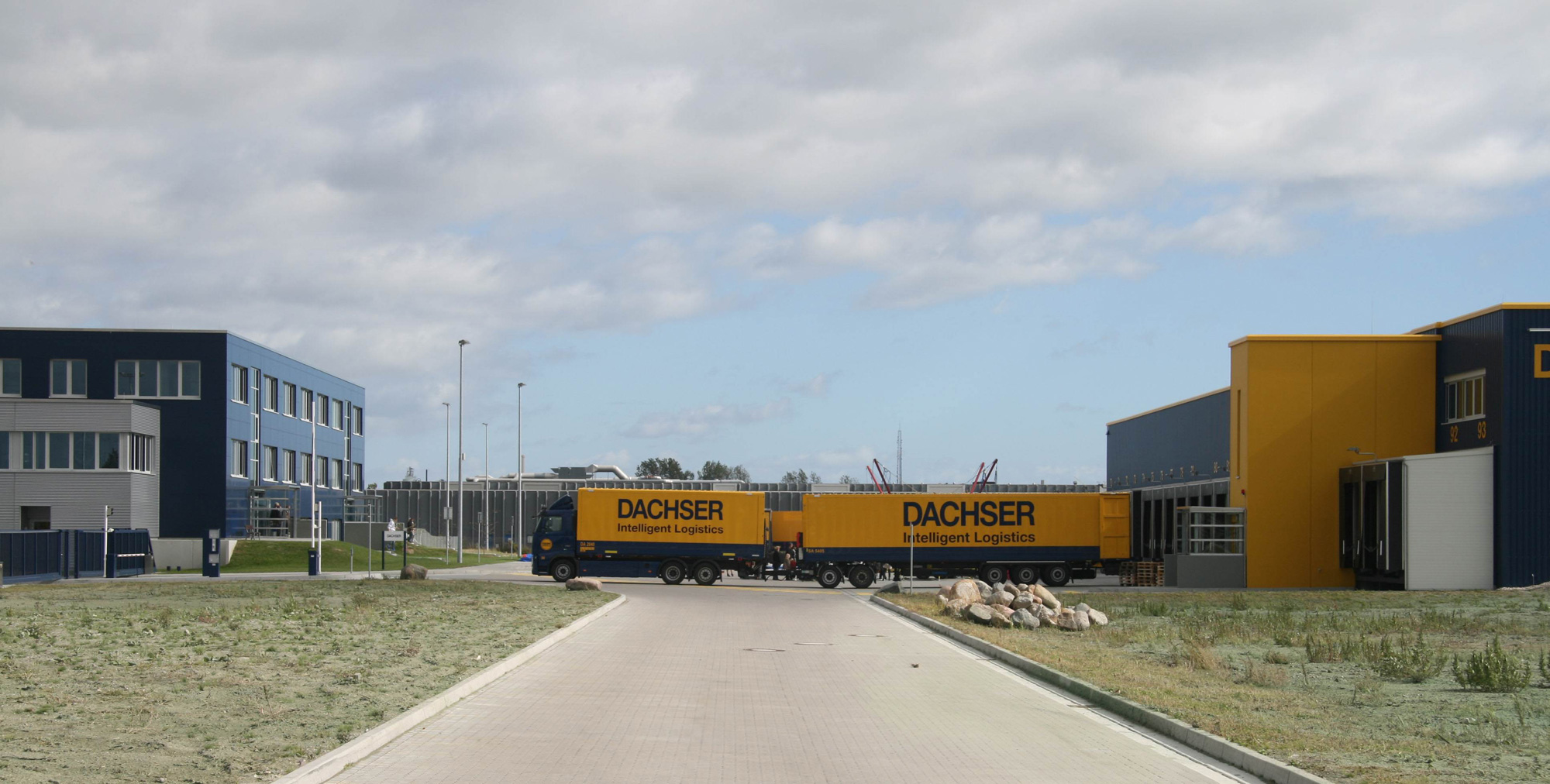
Dachser has opened its new Copenhagen logistics centre on a 70,000-square-metre site in Hvidovre. The internationally operating logistics provider invested around EUR 20 million in the head office of Dachser Nordic A/S where it employs a staff of 95.

Click image to download full size

Dachser managing director Michael Schilling and the managing director of Dachser Nordic A/S, Finn Skovbo Pedersen, welcomed numerous customers as well as guests from the worlds of politics and business.

Following the ground-breaking ceremony in June 2009 and the start of operations in mid-April 2010, the new facility has now been officially opened with a festive ceremony. The logistics centre has a 4,100-square-metre transshipment hall for industrial goods with 41 loading bays. The administrative and technology building covers 3,000 square metres. The branch is quickly reached via the E20 motorway and is just 13 kilometres from the centre of Copenhagen.

“This investment will strengthen our presence in Denmark and Scandinavia. Our customers appreciate the combination of regional competence and a closely meshed pan-European logistics network with intercontinental connections,” says Dachser managing director Michael Schilling.

Dachser is represented in Hvidovre through its European Logistics and Air & Sea Logistics business segments. As a major intersection in Dachser’s pan-European network for groupage system services, the logistics provider serves 13 national and international destinations via direct services from Hvidovre on a daily basis.

“We are one of only a few logistics providers in Denmark with an area-wide distribution system, enabling us to offer our customers a significant competitive advantage,” Pedersen says.

Attractive Employer

The Dachser family enterprise currently employs a staff of 95 at its Hvidovre location and nearly 200 in the country as a whole. Training is given high priority. Every year, Dachser in Denmark trains ten young people as qualified specialists in forwarding and logistics services and warehouse logistics specialists. “Well-trained, qualified and motivated staff are the decisive success factor in today’s logistics,” Pedersen says.

In 2009, Dachser generated total revenue of EUR 3.2 billion. 17,500 staff working in 306 profit centres worldwide handled 41.8 million consignments weighing a total of 29.4 million tonnes.